
I Had 500 Instagram Followers and Zero Friends to Call on a Bad Day
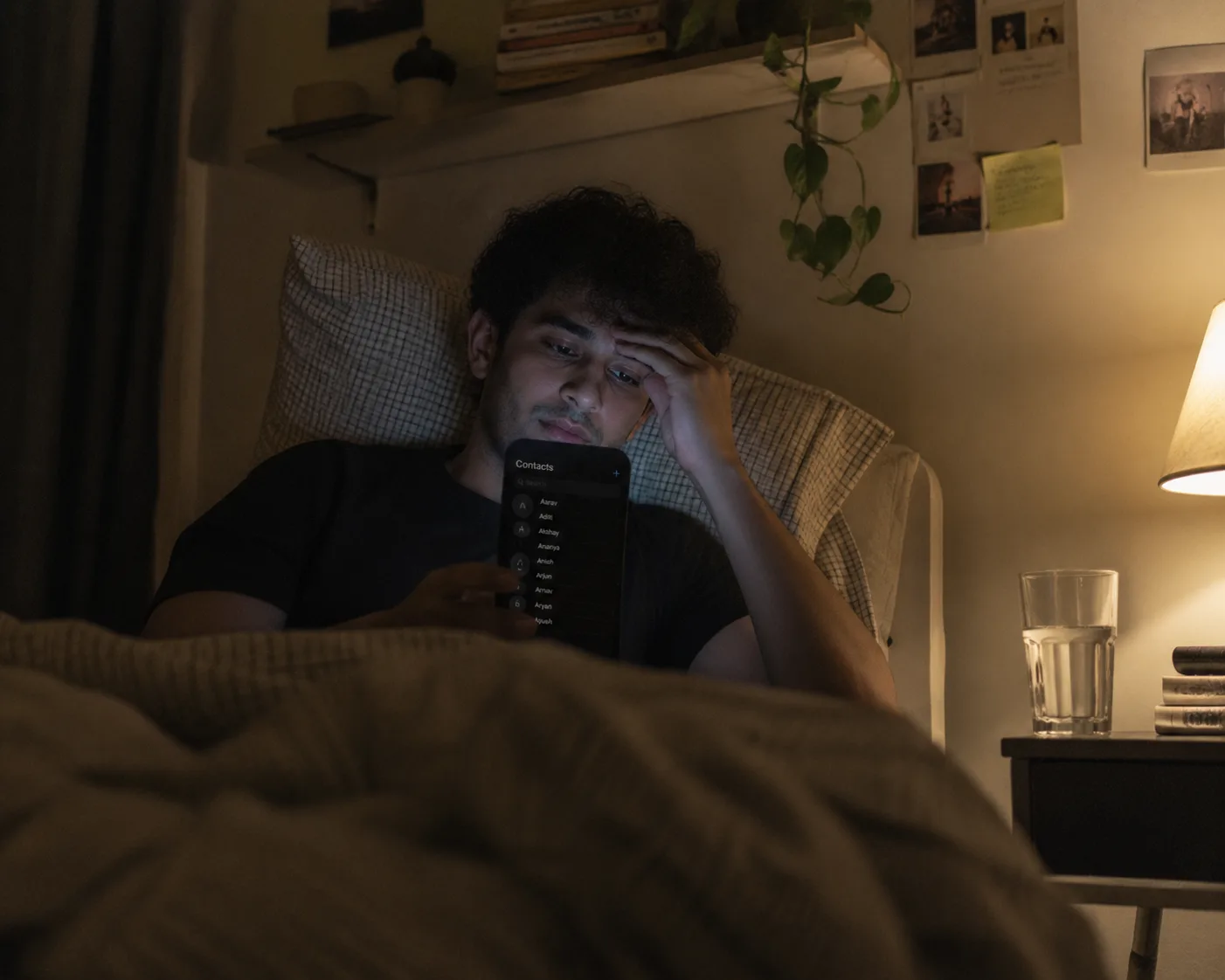
The day was not dramatic. Nobody died. You didn’t get fired. You just had one of those afternoons where everything felt slightly wrong and you couldn’t name why.
You opened your phone. Scrolled Instagram for eleven minutes. Posted nothing. Closed it. Opened your contacts. Scrolled. Closed that too. Opened Instagram again like it might have changed.
You had 500 followers. You had group chats. You had people who liked your last photo within twenty minutes. And when you tried to think of one person you could call and say “today is bad and I don’t want to be alone with my brain,” your list came up empty.
That empty feeling is not a you problem. It’s what happens when you build an audience and forget to build a crisis list. Those are two different projects. Most of us only did one.
Followers live in a different folder than friends
Robin Dunbar, the Oxford anthropologist who studies how human brains handle relationships, keeps finding the same layered shape in basically every dataset, including huge Facebook samples where the average friend count lands around 149.
The layers look like this:
- Inner circle (~5): the people you’d call when something actually breaks. Not “catch up sometime.” I’m not okay.
- Good friends (~15 total): people you see regularly and trust with real stuff, even if they’re not your first call.
- Meaningful network (~150): you’d invite them to a wedding, hug them at an airport, feel weird if you ghosted them.
- Audience (~500+): names, faces, vibes. You know of them. They know of you. Nobody is picking up at 11pm.
Instagram followers mostly sit in that last bucket. Cigna’s 2025 loneliness research found 67% of Gen Z report feeling lonely. Pew put it another way: about 24% of adults under 30 feel lonely all or most of the time, compared to 6% of people 65 and older. The generation with the most visible social life online reports the most isolation in person.
Here’s the counterintuitive part researchers keep running into. A 2025 cohort study on young adults and social media found that using platforms like Instagram wasn’t the strongest predictor of loneliness. Bullying history, anxiety, and how you spend time online mattered more. Passive scrolling and replacing face-to-face hangouts with story views? That’ll hollow you out. Using Instagram to actually coordinate with people you already know? Less harmful, sometimes helpful.
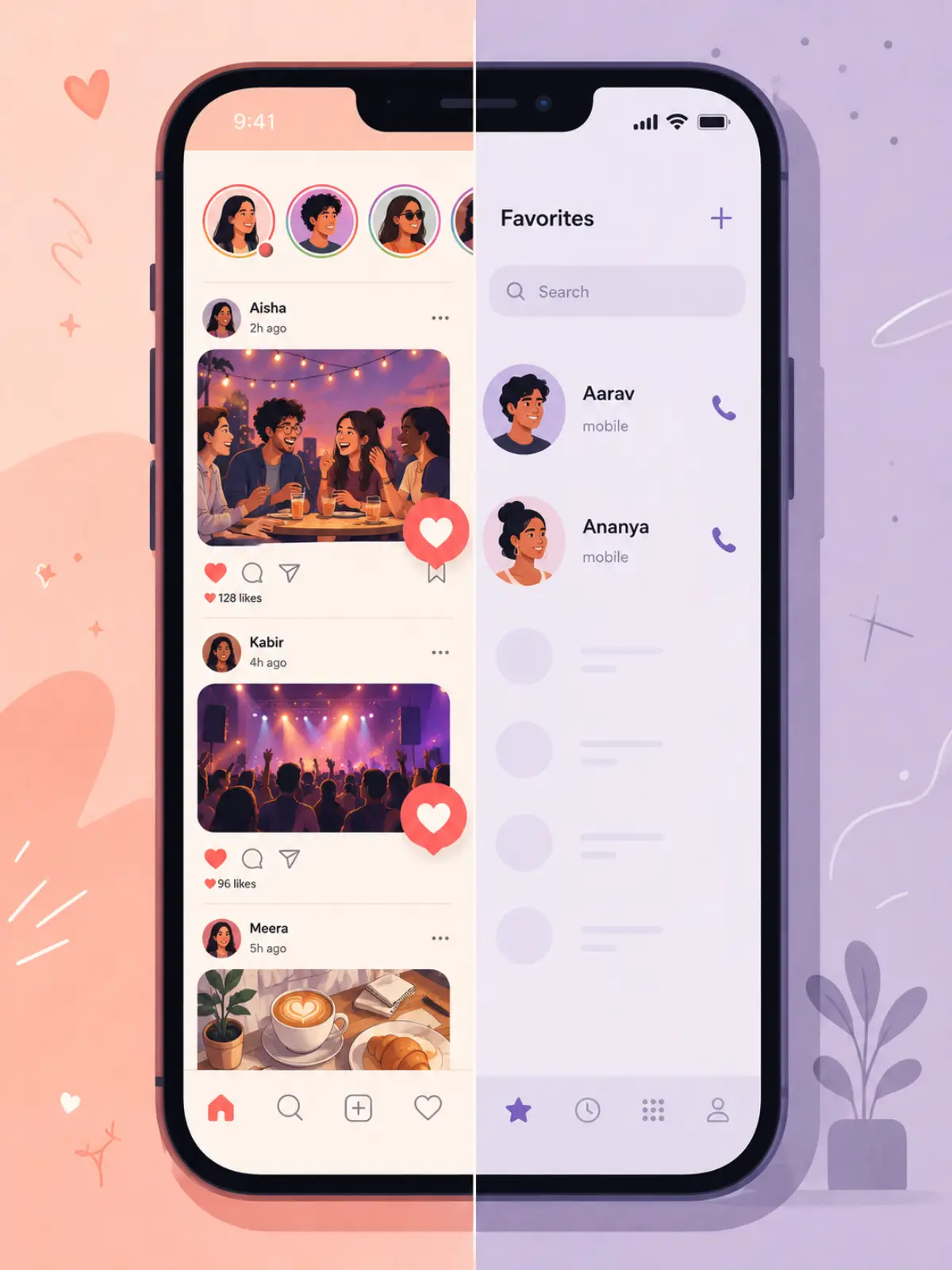
So the issue isn’t “delete the app and move to a farm.” The issue is that likes register as connection in your brain while your crisis folder stays empty. You get the hit of being seen without the work of being known.
Run the scroll test before you need it
Therapists who work on social support networks use a simple exercise: draw three circles. We’re going to make it uglier and more honest, because you’re probably doing this on your bedroom floor at midnight anyway.
Grab your phone. Open notes. Three headings:
Circle 1: Who I’d call if today went sideways
Not who should be there. Who would you actually dial?
Rules:
- They have to be someone you’ve spoken to in the last 60 days. Not commented on their reel. Spoken.
- You have to believe they’d pick up, or call back within an hour, on a random Tuesday.
- You’d feel okay crying in front of them, or at least admitting you’re not fine.
Write first names only. No cheating with “mom” unless you actually talk to mom like a person and not a performance.
Circle 2: Who I’d grab dinner with this week
Warm connections. You like them. Plans feel possible. You’d be happy if they said yes.
These are the people stuck between “real friend” and “person I wave at.” If this circle is full but Circle 1 is empty, you’re not lonely because you lack people. You’re lonely because nothing has crossed the vulnerability line yet.
Circle 3: Who’d notice if I disappeared for a month
Followers, old classmates, coworkers you only talk about work with, friends-of-friends from one wedding, the group chat you mute.
This is your audience. It’s allowed to be big. It’s just not a safety net.
Most people who do this exercise discover the same shape: a fat Circle 3, a decent Circle 2, and a Circle 1 you can count on one hand with fingers left over. Some people get to zero. Survey Center on American Life data from 2024 put the share of Americans with no close friends at 17%, up from 3% in 1990. You’re not the only one staring at an empty inner circle.
The scroll test isn’t meant to shame you. It’s meant to show you where the work actually is.
Graduate one person from audience to callable
You don’t need twenty new best friends. You need one person in Circle 1 who wasn’t there last month. One voice on a bad day changes the whole texture of a week.
Pick a single name from Circle 2. Not your coolest friend. Not the funniest person at parties. Pick whoever feels safe when you’re tired.
You’re going to run what therapists sometimes call a friendship proposal. It sounds intense. In practice it’s just saying the quiet part out loud.
Step 1: One-on-one, low stakes
Group hangs keep everyone performative. Depth gets built two people at a time, usually in settings where nobody is the main event.
- “I’m getting coffee Saturday after my errands. Want to come?”
- “I’m walking to clear my head Sunday morning. Join if you’re free.”
No vague “we should hang.” Name a day. Name a place. Give them an easy yes.
Step 2: Go 10% deeper than usual
Researchers call this incremental vulnerability. You don’t trauma-dump on a Tuesday. You just stop giving the polished version.
Instead of: “Work’s been crazy lol.”
Try: “Work’s been a lot and I’ve been kind of flat after it. Nothing huge. Just tired in a way that’s hard to explain.”
Then stop talking. Let them respond. The people who can meet you there usually will.
Step 3: Say what you’re building
This is the part that feels cringe until you do it once.
“I realized I don’t have many people I can call when I’m having a rough day, and I actually want that with you. Not in a weird way. I just like talking to you and I’d like us to be more real friends.”
Almost nobody reacts badly to that. Most people are quietly hoping someone will say it first. They’re scrolling their own contacts on bad days too.
If you already have acquaintances you want to upgrade and need a step-by-step for that specific jump, the acquaintance-to-friend guide goes deeper on moving people out of the lobby. This post is for when your lobby is full of followers and your inner circle is the empty room.

What a bad-day friendship actually requires
Callable friends are not built from frequency alone. Time with friends dropped roughly 37% between the early 2010s and now, according to American Time Use Survey analysis. But hours only matter if they include the kind of honesty that makes a bad-day call feel allowed.
Three signs you’re getting close:
- They’ve seen you boring. Not just fun-you at brunch. Sick-you, anxious-you, can’t-get-out-of-bed-you.
- You’ve asked for something small. “Can you talk for ten minutes?” “Can you sit with me while I figure this out?” Small asks train both of you for bigger ones.
- You’ve shown up for them too. Support goes both ways. The call-on-a-bad-day relationship is usually already mutual before the first crisis dial.
One thing that quietly blocks this: the fear that needing people will make them leave. Sarah Alfieri, who writes about how emergency contacts get built, keeps finding the opposite in real life. Being the person someone calls at 2am usually deepens the bond. Most people want to be needed more than they admit. Letting someone show up for you is often what moves you from audience to inner circle.
And if your Circle 2 is genuinely empty, not just thin? That’s a different starting line. You need proximity first: a weekly thing where the same faces keep appearing, people who are actually trying to make plans in real life. Apps like AskOut exist for exactly that gap, when your feed is full but your weekend is empty and you need to drop into hangouts with people who showed up to do something, not just perform being social online.
Keep one name on the fridge
Not literally, unless that’s your vibe. But pick one person you’re actively investing in this month. One coffee turned into a walk. One 10%-deeper sentence. One honest “I want us to be real friends.”
You don’t need 500 people who care. You need one person who answers when the day is bad and you don’t want to be clever about it.
The followers can stay. They’re fine for memes and outfit polls and remembering you exist in public. Just don’t confuse the audience with the emergency contact list. Build that second list on purpose, one name at a time, on ordinary days when nothing is on fire.
That’s the whole trick. The rest is just repetition.