
The One Text That Turns a Work Friend Into a Real Friend

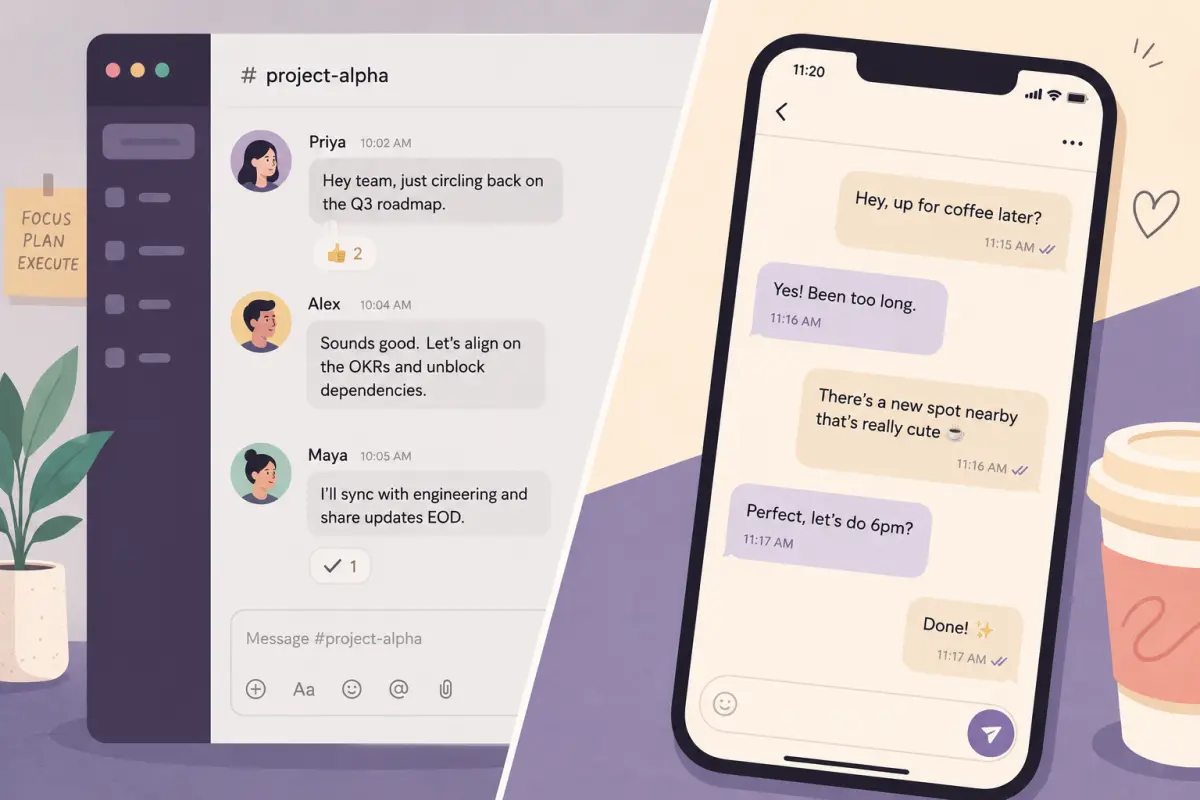
It’s 6:47 p.m. on a Thursday. Your coworker Priya just spent twenty minutes roasting the all-hands deck with you over Slack. You were funny. She was funnier. You both had opinions about the free pizza.
Then you close your laptop and realize you have no one to text about the rest of your evening.
That person is not a stranger. She’s a work friend. And work friends are a specific trap: they feel close because you talk every day, but the closeness lives inside a building you both leave at 7.
This post is about the one text that breaks that trap. Not a friendship overhaul. Not a twelve-week plan. One message, sent at the right moment, that moves someone from “person I like at work” to “person I’d call on a bad day.”
First: figure out which work friend you’re texting
Not every coworker is one text away from real friendship. Researchers who study workplace relationships usually sort them into tiers. You need to know which tier you’re in before you hit send.
The work buddy. You grab lunch. You complain about the same manager. You would not know their partner’s name if your life depended on it. Fine relationship. Not a candidate for The Text yet. You need one more personal detail first.
The close friendly. You’ve swapped weekend stories. They mentioned their mom’s surgery or their breakup or the apartment hunt. They laugh at your jokes and ask follow-ups. They remember things you said three weeks ago. This is your person.
The almost-friend. You already talk outside work channels sometimes. A meme on Instagram. A “how’d the interview go?” after they mentioned it in the pantry. The friendship is trying to happen. It just keeps defaulting back to Slack because that’s where you live.
The Text is built for the close friendly and the almost-friend. If you’re still at work buddy level, your job is to listen for one personal opening in the next week, not to force a hangout invite onto someone you only know over sandwiches.
The hinge nobody sends
Here’s what keeps work friends stuck: the relationship never leaves the office operating system.
Slack is a work channel. Email is a work channel. Even “let’s grab lunch Tuesday” stays inside the professional frame. You’re colleagues who enjoy each other. That’s a real thing. It’s just not the same as friends.
Friendship researchers have mapped this for decades. Work friends who only socialize during the workday report less emotional closeness and less support than private friends, even when they use similar conversation styles. The context caps the connection.
The upgrade isn’t complicated. It’s a channel switch.
Getting someone’s personal number (or moving to WhatsApp or iMessage) is a small act that signals something bigger: I want to know you when we’re not being employees. Northwestern professor Suzanne Degges-White, quoted in recent coverage on work friendships, puts it plainly: swapping numbers shifts the bond from convenience to choice.
That’s the hinge. And almost everyone skips it because sending the first personal text feels like asking someone to prom in front of the HR department.
The one text (and why it works)
The Text has three parts. Miss one and it reads like a calendar invite from a coworker. Nail all three and it reads like a person who was paying attention.
- A specific callback to something they said that wasn’t about work.
- A low-stakes invite with a time, place, and activity.
- An easy out so declining doesn’t feel like rejecting you as a human.
That’s it. No essay. No “we should hang out sometime.” No vague energy.
If they shared something personal recently
They mentioned their sister’s wedding, a show they’re bingeing, a restaurant they want to try, a job interview on Friday.
“Still thinking about what you said about hating the new season of that show. Want to roast it properly over coffee Saturday around 11? There’s a spot near [place] that’s quiet. No worries if you’re booked.”
If you had a great work moment that wasn’t really about work
You bonded over a shared complaint that turned into real talk. They made you laugh so hard you snorted in the pantry.
“Okay the all-hands pizza bit yesterday genuinely made my week. I’m grabbing biryani Friday around 7:30 if you want to continue the roast in a place with better food. Totally fine if not.”
If you’ve already exchanged memes or casual DMs
The almost-friend situation. You’ve dipped a toe outside work channels. The Text just makes it official.
“That meme you sent was unhinged in the best way. I’m checking out [activity/place] Sunday morning if you want in. Back by noon, zero commitment beyond that.”
If they’re remote and you’ve never met in person
KPMG’s 2025 workplace friendship research found 81% of professionals have formed a close friendship with a colleague they rarely or never see in person. The channel switch matters even more here because you don’t get hallway chemistry to do the work for you.
“Your take on [specific thing from a call or Slack thread] was the only sane opinion in that meeting. I’m doing a virtual co-working block Saturday 10 to 12 if you want to join and actually talk like humans. Can send a link, no pressure.”
The part your brain will lie about
You will read The Text three times and think: this is too much, they probably don’t even like me that much, what if it’s weird at work tomorrow.
That voice has a name. Psychologists call it the liking gap: after conversations, people consistently underestimate how much the other person enjoyed talking to them. Yale researcher Erica Boothby found this in strangers, in dorm mates, and it lasted months in some cases. You’re not special in your self-doubt. You’re normal.
Your work friend already likes talking to you. The evidence is in the Slack thread. The pantry laughs. The fact that they told you about their weekend at all.
The risk isn’t that they’ll think you’re weird. The risk is that you never send the text and the friendship stays rented to the office.
Send it within 24 hours of the moment you’re referencing. Specificity fades fast. “That thing you said yesterday” hits different from “that thing you said about your landlord raising rent.”
A quick decision tree before you send
Not sure which version to use? Run this in ten seconds.
- Did they share something personal in the last week? → Use the personal callback version.
- Did you only bond over work chaos? → Wait for one non-work detail, or use the “great moment” version with a very casual invite.
- Have you already texted memes outside Slack? → Use the almost-friend version. You’re not starting from zero.
- Are they your manager or someone who evaluates you? → Skip The Text. Keep it professional. This playbook is for peers.
- Did they mention a partner who gets jealous about work friendships? → Also skip. Not your lane.
What happens after (the short version)
If they say yes: show up. Don’t turn the hangout into a performance review of your friendship. One good non-work hour counts more than six months of Slack banter.
If they say “can’t this time but let’s do another week”: that’s not rejection. That’s a door. Suggest one specific alternative date. Once.
If they leave you on read: one gentle follow-up a week later, then stop. Some work friendships are supposed to stay at work. That’s information, not a verdict on your personality.
If the friendship sticks: you’ll notice the shift fast. They text you about things that have nothing to do with your company. You stop mentally prefixing every plan with “work friend.” The relationship gets its own file folder in your head.
And if your whole social circle is currently just coworkers who all leave at 7, that’s also where apps like AskOut help, you can join weekend plans with people who aren’t on your payroll, so one work friendship isn’t carrying your entire social life.
For the broader playbook on moving any acquaintance out of the context where you met them, this piece on turning acquaintances into real friends covers the full upgrade path. The Text is just the work-specific first rung.

The whole thing in one move
You don’t need to become the most interesting person in the office. You need to become the person who sends the text.
Pick the coworker who already feels like more than a lunch slot. Wait for one moment where they said something real. Send the callback, the invite, and the easy out. Move it off Slack.
Priya might say no. She might say yes and become the person you text at 6:47 p.m. on a Thursday when the pizza joke is already old news and you just want someone who gets it.
You’ll never know which one until you send it.