
Why Making Friends Gets Harder After 25 (And What Actually Works)

Researchers tracked the phone records of three million people and found the exact age your social circle peaks.
It’s 25. After that, the graph just goes down.
Not because you got boring. Not because everyone secretly hates you now. The Aalto University and Oxford team behind that study found that people meet and add new friends constantly in their early twenties, and then start losing them faster than they can replace them. For basically the rest of their lives.
So if you’re 26 and wondering why your last real friendship formed in a college hostel corridor, congratulations. You’re not broken. You’re on a curve that everyone is on and nobody talks about.
The good news: the reasons it gets harder are specific and well-studied, which means the fixes are too.
School made friendship easy and nobody told you
Sociologist Rebecca Adams found that friendship needs three ingredients: being physically near people, meeting them again and again without planning it, and a setting where people relax and open up.
Read that list again and notice something. School and college had all three, built in, for free.
- Nearness: the same 60 people, in the same building, every single day.
- Repetition: you didn’t schedule time with your bench partner. It just kept happening.
- Openness: everyone was new, broke, confused, and figuring out who they were. Being open was normal.
Adult life quietly removes all three. You go from your flat to your office (or worse, from your bed to your desk). The people you see repeatedly are coworkers, and nobody opens up in front of someone who might be in their appraisal meeting. Unplanned meetings are gone because every hangout now needs a poll in the group chat and two weeks of back-and-forth.
You didn’t lose the ability to make friends. You lost the setup that made it easy. Those are very different problems, and the second one can be fixed.

The math nobody warned you about
Jeffrey Hall, a communication researcher at the University of Kansas, measured friendship in hours. His studies found it takes roughly 50 hours together to turn an acquaintance into a casual friend, about 90 hours to reach “friend,” and over 200 hours to make a close friend.
Two hundred hours. In college, you’d reach that in a semester without trying. As an adult, do the math on one coffee catch-up a month. That’s 12 to 18 hours a year. At that speed, your new “close friend” arrives sometime around your retirement party.
And here’s the detail everyone misses: Hall found that hours spent working together barely count. Free time, joking around, hanging out with no goal, that’s what actually builds friendship. So no, your work bestie of three years isn’t automatically your real bestie. You’ve spent a thousand hours together, but the wrong kind of hours.
It gets worse. Robin Dunbar’s research at Oxford shows friendships fade without contact. Go roughly six months without seeing a close friend and they start feeling more like an acquaintance. Friendship isn’t a prize you win once. It’s a plant you keep watering, and after 25 everyone’s watering can has a hole in it.
Your brain is also working against you
Here’s the part that stings. Even when adults do meet someone promising, most of them let it slip, and psychology knows exactly why.
It’s called the liking gap. Researchers at Cornell, Harvard, and Yale found that after talking to new people, we consistently underestimate how much the other person liked us. We walk away replaying the one awkward thing we said, while they walk away thinking we were great. The shyer you are, the bigger the gap. And in their studies, it lasted for months, even among college dorm mates who lived together.
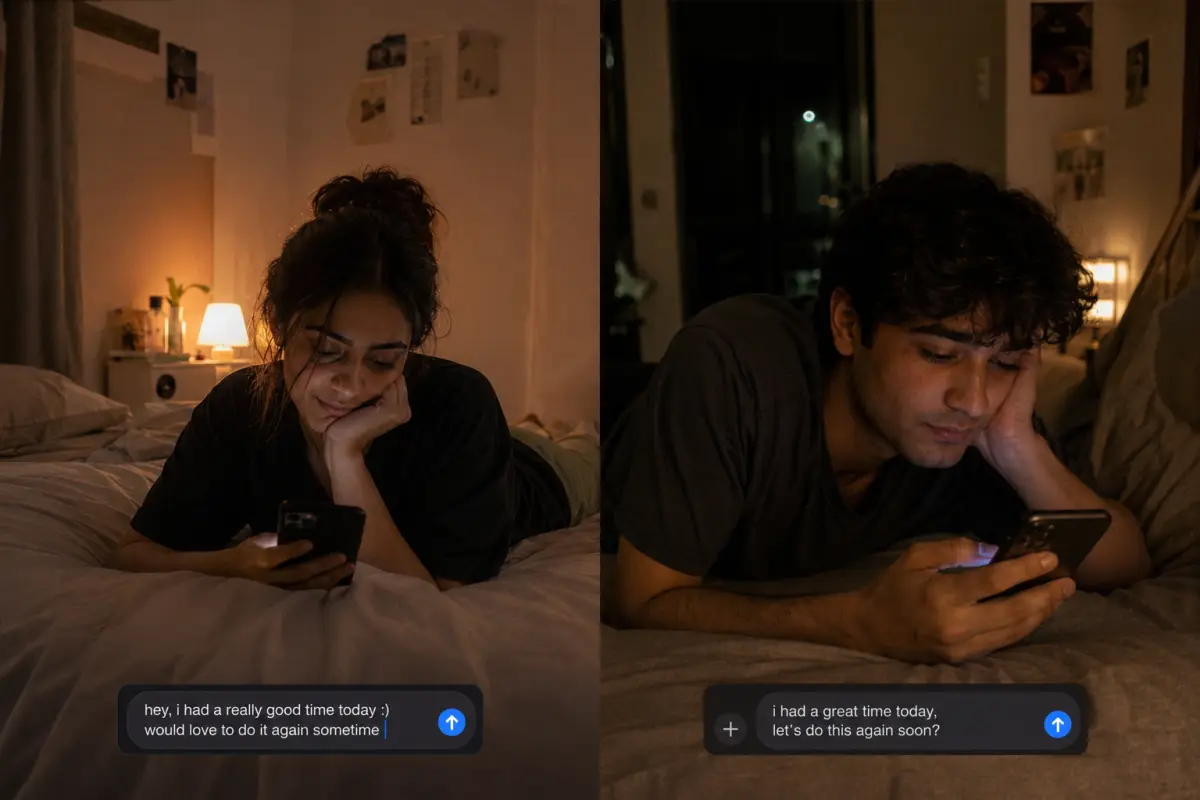
So the typical adult “friendship attempt” goes like this. You have a genuinely nice conversation with someone at a wedding or a workshop. You think “they probably have enough friends.” They think the same about you. Nobody texts. The end.
One in three people aged 16 to 34 feels lonely at least once a week, according to 2025 Ipsos polling, while three quarters of the same group say they have “many” friends. That’s not a contradiction. That’s millions of people stuck in the liking gap, each waiting for the other one to text first.
The person you clicked with last month is probably thinking the same thing right now. About you.
Bring back the three ingredients, don’t collect more tips
Most adult-friendship advice is just a list of hobbies. Fine if you just moved. Less useful if your real problem is that the three ingredients disappeared and your brain keeps telling you people don’t like you.
After 25, the job is narrower: be near people again, see them repeatedly again, and stop letting the liking gap silence you. Everything else is extra.
Be near the same people, on purpose
You need the same faces in the same place, without inventing a new outing every week. That means one weekly thing you care about enough to attend even when you’re tired: a course with a fixed group, a weekly sport, a volunteer shift, a faith or community group, whatever you’ll actually return to.
The activity itself barely matters. What matters is that familiarity gets a chance to build up. One-time mixers mean you see each person exactly once. School worked because you saw people automatically. You’re just rebuilding automatic.
If you need the full guide for finding these groups after a move, that’s a different problem. The new-city friends guide covers it. This post assumes you can find a room. The post-25 problem is staying long enough for the hours to add up.
Spend free-time hours, not work-adjacent hours
Hall’s finding about work hours is the quiet killer of adult friendship. Sitting next to someone in standups for three years feels like closeness. It isn’t. The clock that builds friendship only runs during free time with no work attached.
Look honestly at where your time goes:
| Time you already spend | Friendship value |
|---|---|
| Team lunch while talking about tickets | Low |
| Same café, phones out, “we should hang” | Near zero |
| Two hours of nothing planned after the thing you both showed up for | High |
| A slightly unusual shared experience (trek, open mic, terrible escape room) | Highest |
Cornell researchers found that new shared experiences bond people faster than routine ones. So if your only adult hangout is the same coffee catch-up every time, you’re spending the hours but getting half the result. Turn one of them into something you’ll both remember, even if it’s silly.
Beat the liking gap with a specific ask
The liking gap only wins if both people stay quiet. After a warm conversation, assume the other person liked you more than you think, and act before the memory fades.
The rule: name a day, not a vague “sometime”. “We should hang out sometime” gives both of you an easy way out. “Free Thursday after 7 for that place you mentioned?” forces a yes, a no, or a counter-offer. Most of the time it’s a yes, because they liked you more than you think.
You don’t need a perfect script. You need proof you were paying attention (mention something from the conversation) plus a fixed time. If they cancel once, offer one more specific option. If they cancel twice, stop trying with them. The liking gap is real. So is disinterest.

Your post-25 friendship budget
Advice is cheap. Hours are not. Use this budget instead of another week-by-week bootcamp. It’s built for people who already have jobs, rent, and a phone full of people they “mean to text.”
The monthly minimum
Treat friendship like a bill you pay before spending on everything else:
- 8 free-time hours with people you’re trying to get closer to (not sitting near coworkers, not scrolling in the same room)
- 2 standing plans that repeat without discussion (first Sunday brunch, every other Thursday games, whatever sticks)
- 1 message to a friend who’s drifting away (the one you haven’t seen in 3+ months)
- 1 session in a new group if you don’t know enough people yet (the weekly thing from above)
Eight hours a month won’t get you to 200 overnight. It will stop the graph from falling while something real gets time to form. Skip the month and you’re not “busy.” You’re choosing the downhill slope.
Meeting people vs keeping them (find your leak)
Most people after 25 are losing friends from one side more than the other. Figure out which before you panic.
If you’re lonely but keep meeting people: your problem is follow-through. You have acquaintances, but no hours with them. Stop joining new groups for 60 days. Spend the budget on one-on-one time with the two people you already like most. Build hours with people you know instead of collecting more first meetings.
If your calendar is empty: your problem is that you’re not near people. You need one weekly group before you need better texts. Join something that meets every week no matter what. Give it four sessions before deciding the city has no one for you.
If you have friends and still feel lonely: your problem is depth or upkeep. Ipsos found plenty of young people with “many” friends who still feel alone every week. That usually means surface-level contact without real free time together, or close friends drifting past that six-month mark. Standing plans fix this faster than another hobby.
The things that quietly eat the budget
- Counting work hangouts as friendship hours (they barely count)
- Waiting until you “feel close enough” to suggest a plan (closeness comes from the plan, not before it)
- Keeping twelve half-plans alive instead of two fixed repeating ones
- Treating every quiet week as proof you’re bad at this, instead of a normal gap in adult schedules
- Meeting the same group forever and never turning it into one-on-one time
If the real blocker is that nobody in your circle can fix a weekend anymore, AskOut is a useful post-25 shortcut: you join a plan that’s already happening, so your friendship hours actually get spent instead of waiting on a group chat that never decides.
The part where you actually text someone
Here’s the thing about that downhill graph from the phone study: it’s an average. It describes people who let the easy setup disappear and replaced it with nothing.
The research is honestly kind of freeing. You don’t need to be funnier, cooler, or more interesting. You need the three ingredients back, real free-time hours on the clock, and enough courage to text first.
Someone you’ve met in the last month thought you were great and assumed you were too busy for them. Go prove them wrong.